Why Girona Became the Cycling Capital of Europe
How a small Catalan city of 100,000 people became home to more professional cyclists than anywhere else on the planet.
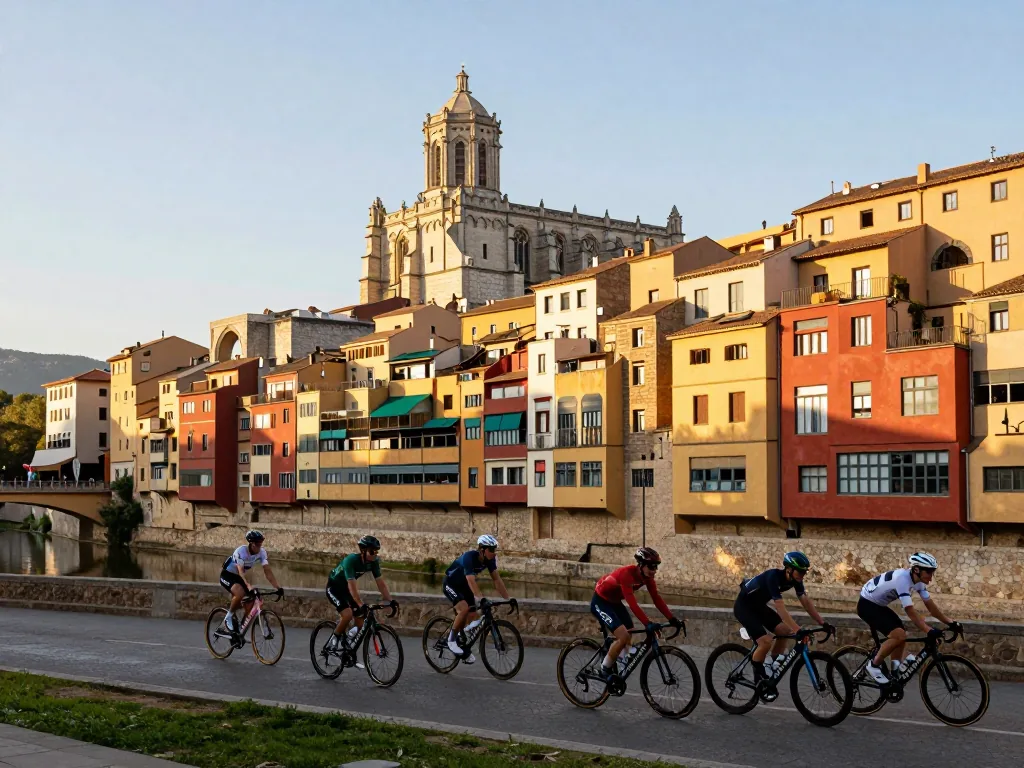
Walk into any café in Girona’s old town on a Tuesday morning and you will hear at least four languages — spoken by riders in matching team kit, legs freshly shaved, discussing power numbers over cortados. This is normal here. Girona, a city of just over 100,000 people in Catalonia’s northeast, is home to more professional cyclists than any other place on earth.
How Did It Happen?
The story usually starts in the late 1990s, when a handful of riders — most famously Lance Armstrong’s circle — discovered that Girona offered something no training base in Europe could match:
- The terrain. Flat river valleys, rolling inland hills and serious mountains within an hour’s ride. The Pyrenees are visible from the city walls.
- The roads. Smooth tarmac, respectful drivers and a spiderweb of quiet country lanes in every direction.
- The climate. Around 300 days of sunshine a year and mild winters that make December rides in arm warmers a regular thing.
- The city itself. A walkable medieval old town, world-class restaurants (this is the home of El Celler de Can Roca), and an international airport 15 minutes away.
A Culture, Not Just a Training Base
What keeps riders here isn’t just the riding — it’s the community. Cyclist-owned cafés, bike shops with espresso machines, weekly group rides where amateurs find themselves chatting with Grand Tour stage winners. The city breathes cycling in a way that feels completely natural.
“In Girona, you’re not the weird person in Lycra. The person in the suit is the weird one.”
Come See It Yourself
The best way to understand Girona’s magic is from the saddle. Our Classic Girona Road Tour follows the exact roads the pros use — and yes, the coffee stop is included.